
Michiko Kubota
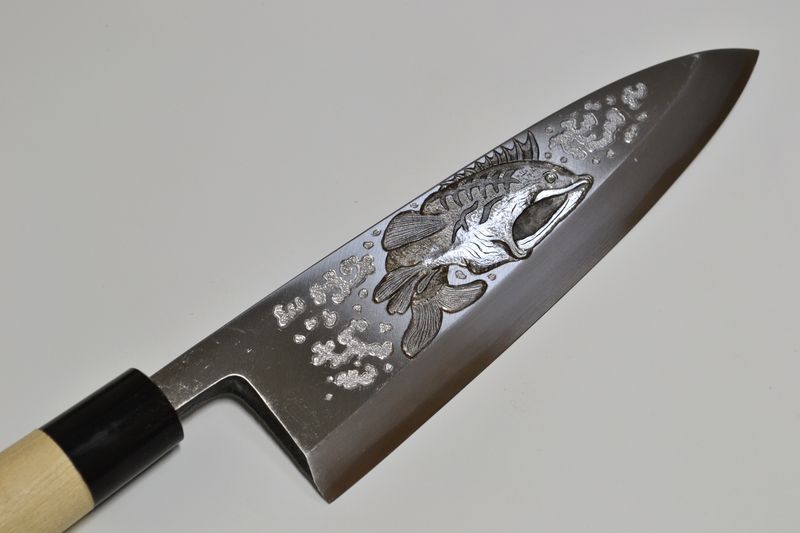
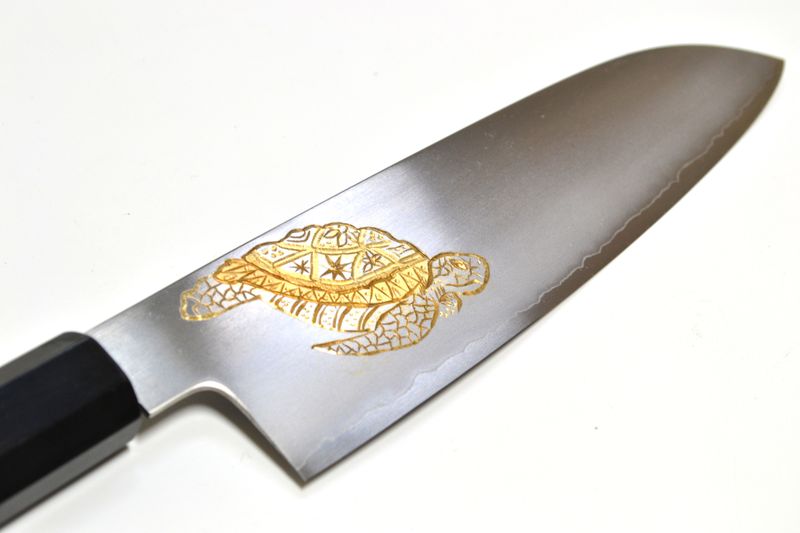
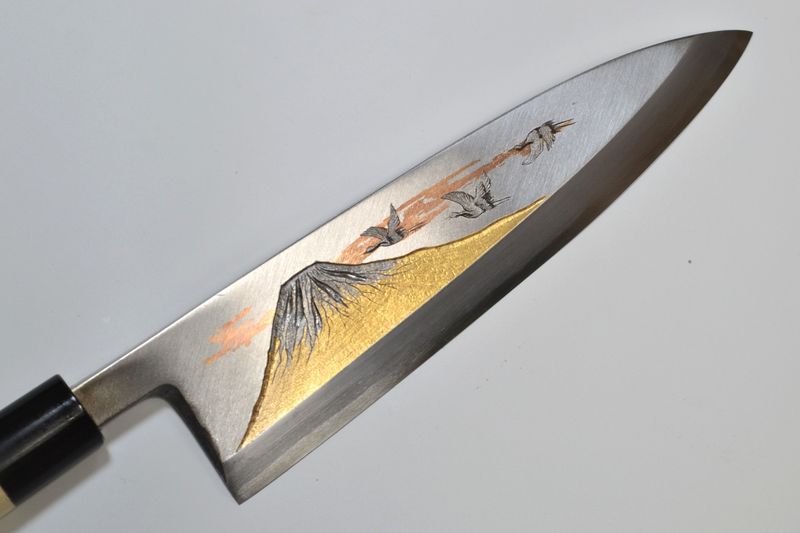
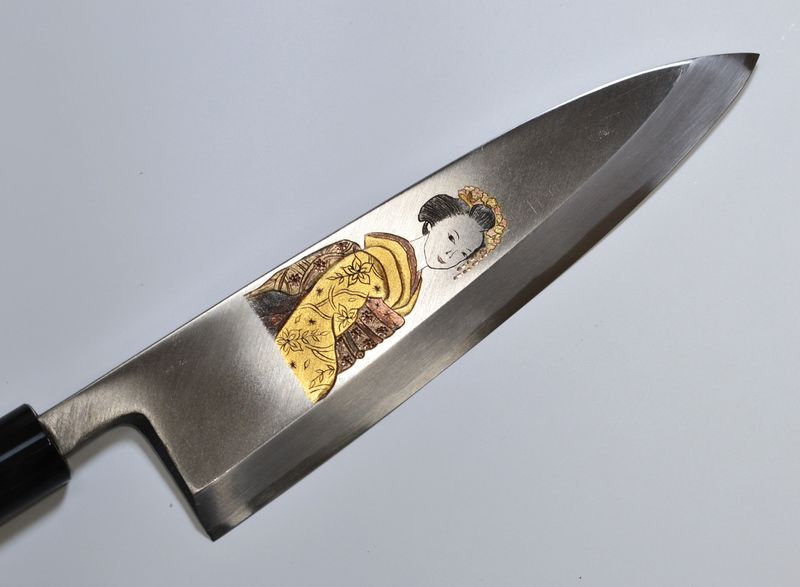
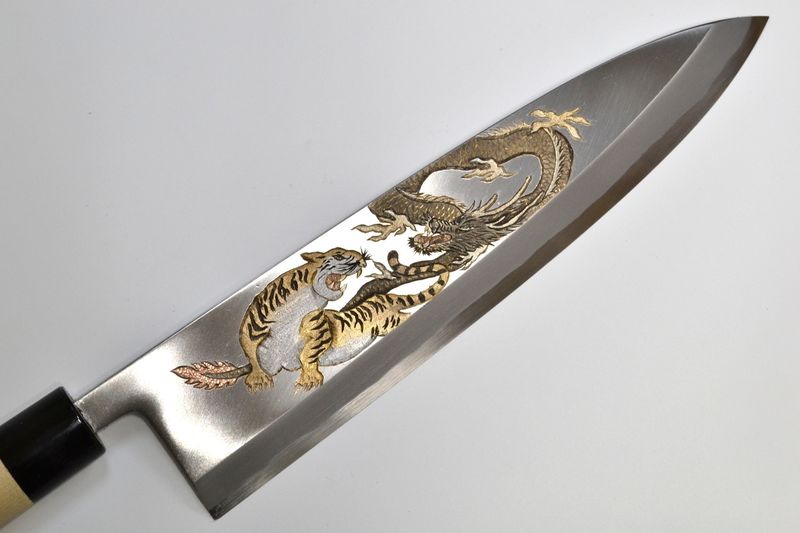
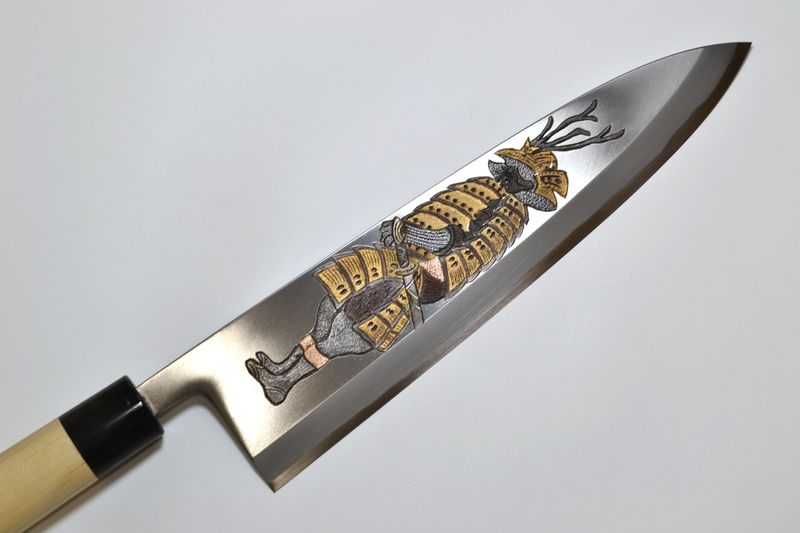
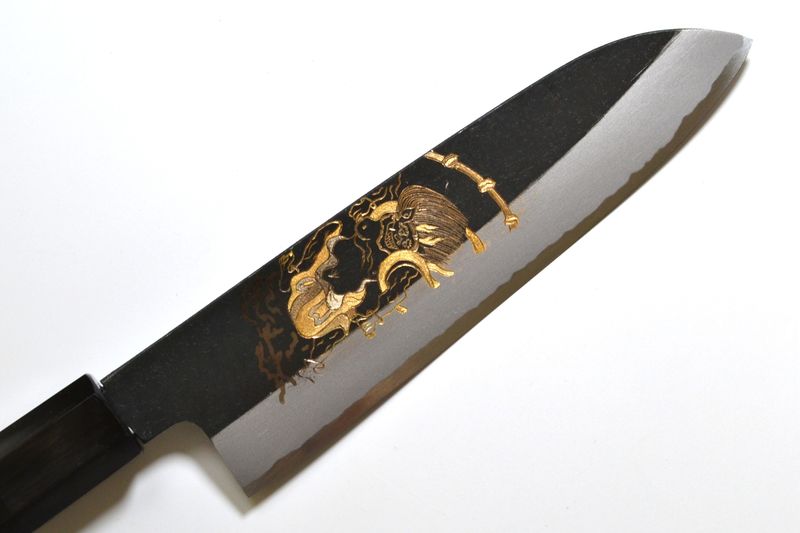
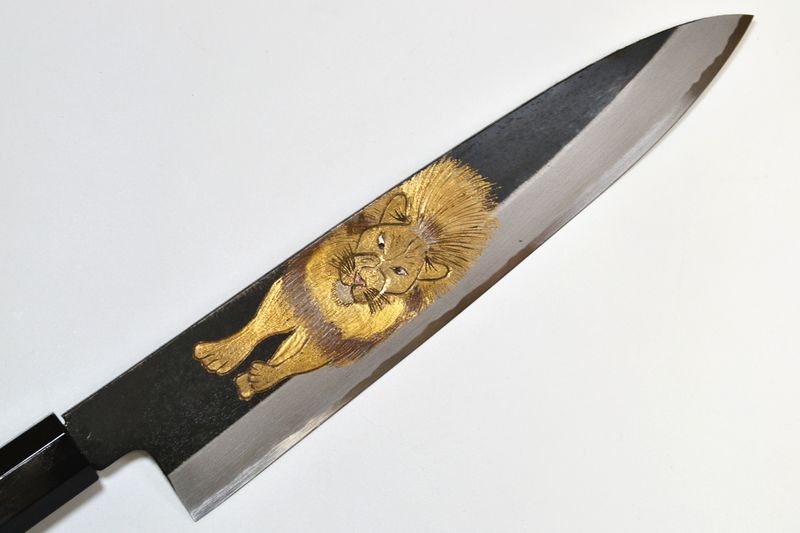
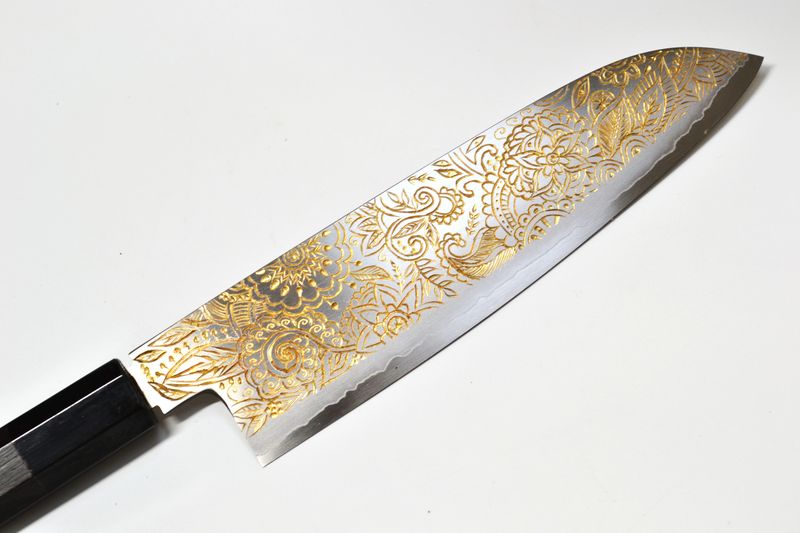
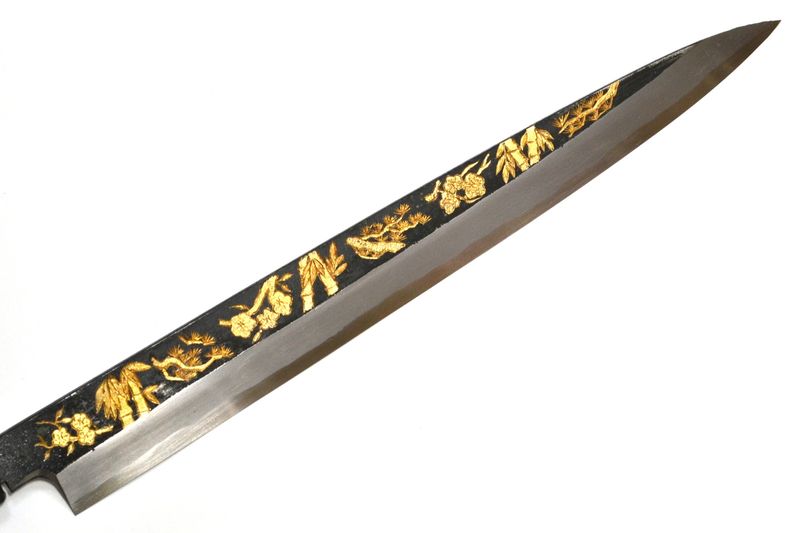
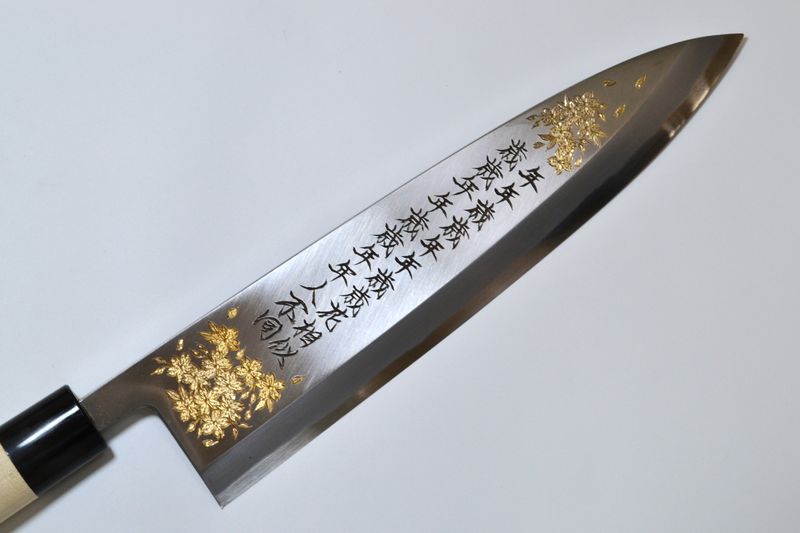
KUBOTA ENGRAVINGEngraved entirely by hand with chisel and hammer, each blade becomes her canvas. Every knife is a unique work of art.
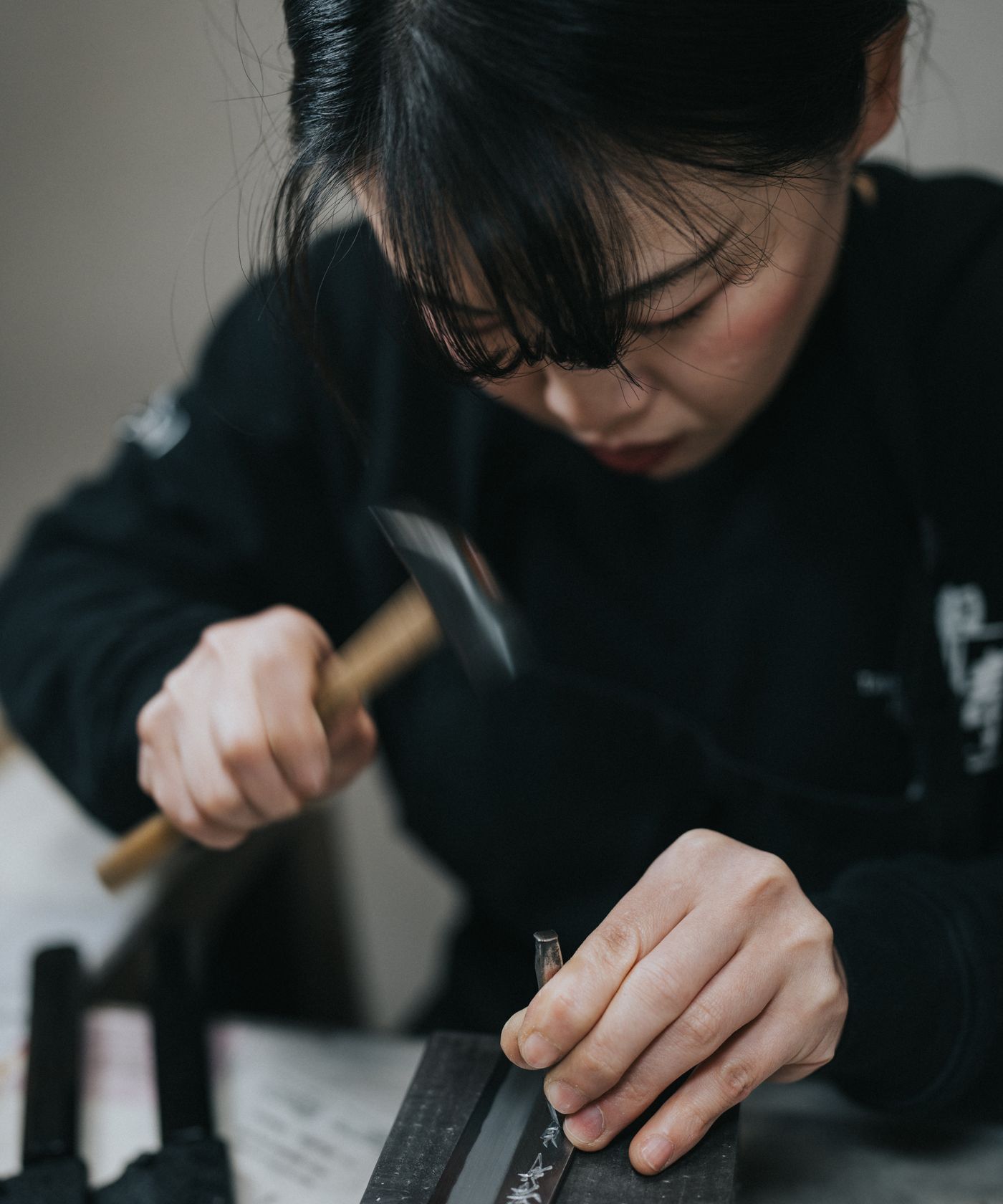

It began with a signature
Born in 1991 in Takatsuki, Osaka, Michiko Kubota was drawn to handcraft from an early age. She studied calligraphy throughout her school years, qualifying as a junior calligraphy instructor, before graduating from Ritsumeikan Asia Pacific University.
In search of her calling, she visited artisans working in tatami, kimono, washi paper, ceramics and traditional wagashi confectionery. It was at a long-established knife shop in Kyoto, watching a craftsman carve a maker’s signature (mei-kiri) into a blade, that she knew she had found her path. She wrote to knife makers across Japan and was turned away many times, until Takahiro Aoki, president of Aoki Hamono (Sakai Takayuki) in Sakai, Osaka, welcomed her without hesitation.
The birth of the engraved knife
Entrusted with engraving signatures, she set out to create “a knife that only I could make”. Teaching herself the art of engraving, she developed her own distinctive style through years of patient refinement. Sharing her work online led a trading company in China to commission ten knives engraved with koi, and orders from distributors in Japan and around the world soon followed. Today, “Kubota Engraving” is the name synonymous with engraved Japanese kitchen knives.
「人生は消しゴムなしで描く芸術です。」
“Life is a work of art drawn without an eraser.”
— Michiko KubotaThe making of each knife
-
 01
Design
Each composition begins as a pencil sketch, drawn down to the finest detail and expression. Colour is then added to plan the depth and shading of the final engraving.
-
 02
Crafting the chisels
She makes every one of her dozens of chisels by hand, shaping, grinding and polishing each one. The angle of the tip determines the width of the line, while the grit of the stone defines the shine of every cut.
-
 03
Chisel and hammer
With the hammer in her right hand and the chisel in her left, she controls the depth of each cut through angle, pressure and force. To keep every strike precise, she always rests before fatigue sets in.
-
 04
Finishing
The blade is checked and straightened to correct any distortion from engraving, then fitted with its handle. Finally, she selects washi paper to complement the design, writes the name of the work by hand, adds her seal and mounts it on the box.


Eleven themes · around 200 designs
Exhibited around the world
- Expo 2025 Osaka, Kansai
- World SUSHI CUP · Ariake, Tokyo (every August)
- Seisuke Hamono cherry blossom festival · Asakusa, Tokyo (every April)
- Tanuki-ya knife festival, Nozawa Onsen · Nagano (every February)
- HOTELEX SHANGHAI 2019 · Shanghai
- Exhibitions in Chicago (USA), Cancún (Mexico), La Rochelle (France) and Porto (Portugal)
- Distributor events in the Netherlands, Singapore, Hungary, the USA, Korea and Canada
Featured in Japan and abroad
- Kansai TV · Yoi Don! (2024)
- Yomiuri TV · Kansai Jōhō Net ten. (2024)
- Asahi Broadcasting · LIFE: Yume no Katachi (2024)
- TV Osaka · Yasashii News (2023)
- Forbes Hungary (2025)
- YouTube: COMMONS | Stories from Japan, THE MAKERS OF JAPAN and others

Michiko Kubota × Sakai Takayuki engraved knives
Officially recognised by Sakai Takayuki
Special production rights for master-engraved pieces · priority dispatch